

Where it all started
A handful of cacao seeds
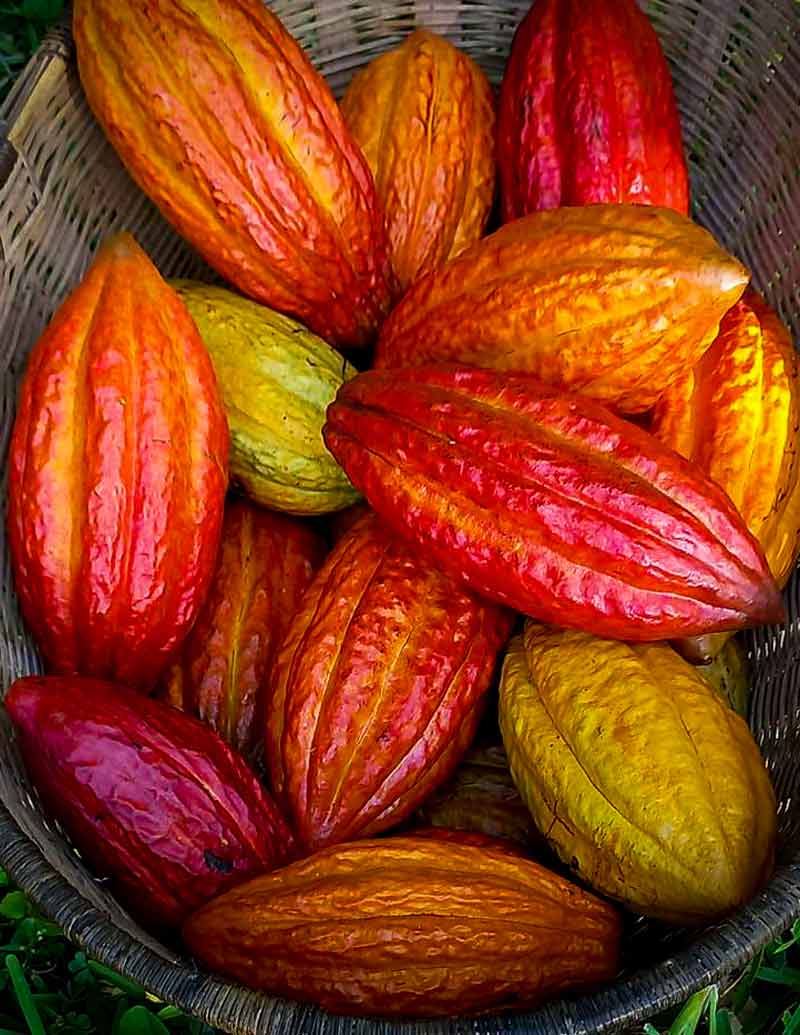
Our journey started serendipitously in 2009 with the planting of a handful of Trinitario cacao seeds in Chipoka, Malawi, having received them from a visiting passenger off the Lake Malawi steamer. This led to our first crudely made bean-to-bar chocolate in 2016. Beans were subsequently imported from Kokoa Kamili in Ifakara, Tanzania in 2018, and in 2019 working trips were undertaken to Sierra Leone, Tanzania, Ghana, Sao Tome and Principe. We set up our first commercial processing plant for 40kg batches in Malawi in 2021, followed by our 8000kg/month plant in Koedoespoort, Pretoria, South Africa, in 2022.
Don’t Settle For Less
Cacao from Africa
We source our cacao from growers in East Africa and on the islands around Africa that produce Trinitario and Criollo cacao, occasionally blending with Amelonado or Upper Amazon Forasteros (UAF). The benefit of this is that we can focus on growing superior cacao that does not suffer from the impact of the diseases prevalent in South America, West Africa and Malaysia/Indonesia (where high cadmium levels in the soil influence quality in certain areas).
All beans are hand-picked by our sources in Eastern Congo, Malawi, Tanzania, Uganda in East Africa and Madagascar, and processed in batches of 50kg minimum. Although most clients baulk at the price, due to the cost of our raw materials, cocoa butter for Sengi Cocoa’s own use is pressed from select batches and blended into our couverture chocolate. Nut butters are produced in our food-safety approved processing facility to the specifications of our clients, by blending cocoa with macadamias, almonds and hazelnuts
Theobroma cacao
Understanding chocolate at species level
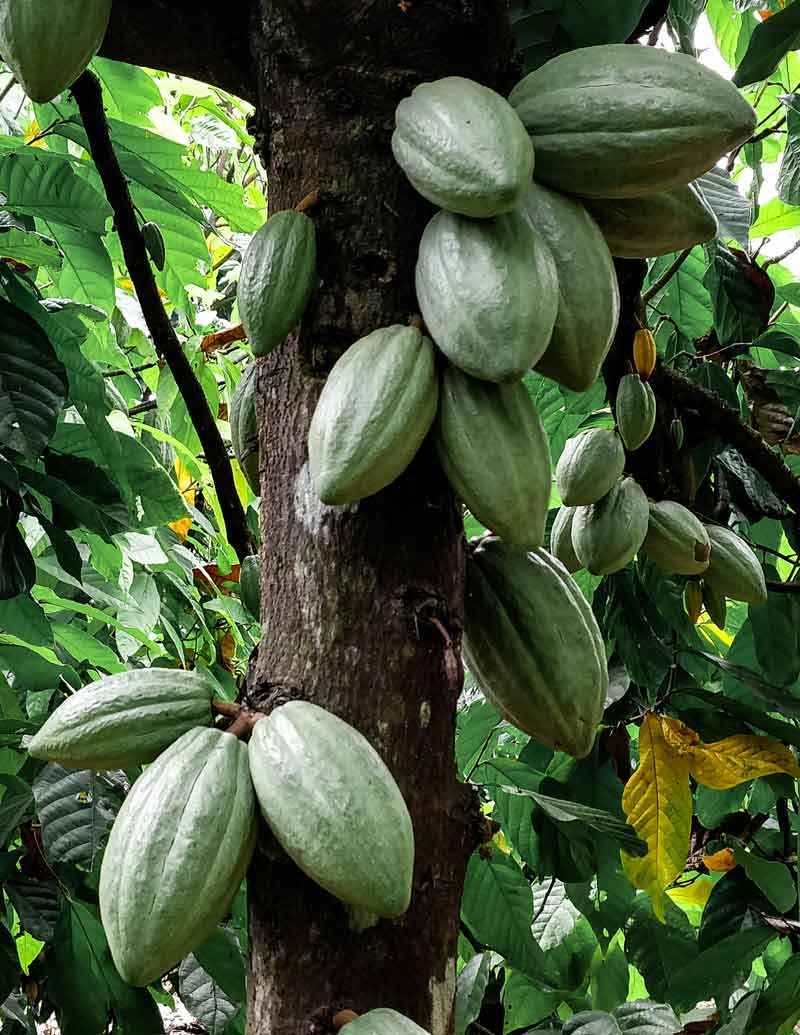
Although about 20 species make up the genus, only Theobroma cacao, known as “Cacao”, is regarded as suitable for chocolate-making. Some small-scale production of chocolate-like products of the white-seeded T. bicolor (“Pataxte”) and juice of T. grandiflora (“Cupuassu”) is consumed, mostly in South American countries of origin.
10 distinct populations
Generally, people might know of three “types” of Theobroma cacao: Trinitario, Criollo and Forastero. In fact, more recent research has revealed that there are at least 10 distinct populations (the more correct technical term) of cacao, mostly named for the river valleys from which they originate.
Read more
The official groups are Amelonado (“Forastero”) Contamana, Criollo, Curaray, Guiana, Iquitos, Maranon, Nacional, Nanay and Purus. More are likely to be added as more areas rendered difficult to access for various reasons, are opening to exploration.
Trinitario is technically a natural cross (NOT a hybrid) between Criollo x Amelonado, originating in Trinidad after the industry in this part of the world was hard hit by a disaster. Many subsequent deliberate crosses have been made in other parts of the world between the groups called Upper Amazon Forastero Populations and Criollo, or inter/intra – group, leading to the confusion presently ruling in the artisanal chocolate world. The blue highlighted names are the populations traditionally associated with “edelkakao” flavour or fine flavour cacao. It has now been confirmed that judicious fermentation and drying can produce excellent flavour profiles in most cacao, not just the populations with a natural advantage such as Criollo or Nacional.
This experience has much in common with making wine – a good wine can be made from inferior cultivars, but exceptional wine requires superior cultivars AND superior viniculture.
The comparison with grapes and wine
Comparing cacao and chocolate to grapes and wine, helps to make sense of it all. Not all grapes are “wine” grapes, and even less of the varieties are good for producing exceptional wines. At this point, “populations” in cacao are regarded in the same light as varietals are in wine making. The Criollo populations’ beans are predominantly white or lighter in colour than those of other populations and has apparently been domesticated for around 3400 years. Similarly, Nacional, a population of cacao originally from Ecuador had been used by local people for as long as 4500 years. Due to the spread of Witches Broom disease, almost all the original genetics of the Nacional type have been lost, and these are now being reconstructed as neo-Naional to emulate the original Nacional characteristics, which was originally sold as “arriba” cacao.
Just like each wine grape variety gives wine with a typical character, determined by:
01. Variety
02. Terroir
03. Vinticulturist’s skill
Chocolate quality depends on:
01. population
02. Origin (Terroir)
03. Chocolate-maker’s skills
The farmers
More often than not, East African farmers grow cacao as a cash crop alongside subsistence crops.
Although the whole family may participate in the growing and harvesting process, no people from outside the family circle is ever involved. Like in any other family. In West Africa, children are expected to help with chores., Although allegations of human trafficking and child slavery have been on the forefront for decades, this is fortunately not the case in East Africa or the Islands.
Sengi Cocoa aims to assist farmers with materials and technologies that will enable them to “work smarter, not harder” to earn more from their cacao. By using environmentally sensible methods they can produce more cacao of better quality on less land and earn higher income while being sustainable.
And the farms
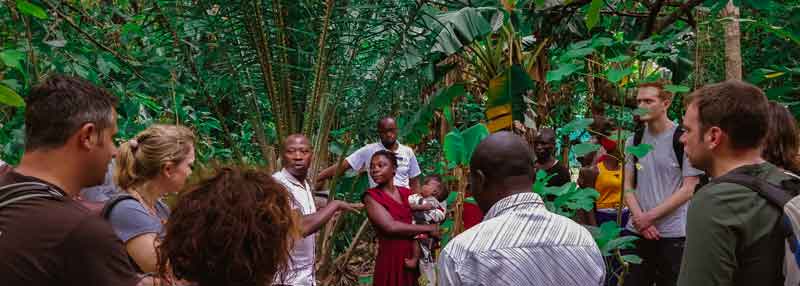
All the farms grow either Trinitario or Criollo types, with very little Upper Amazon Forastero or Amelonado influences (see Understanding chocolate). Due to local selection for yield and
disease resistance/tolerance, several sub-populations are reverting in the F5 and later generations to more homogenous populations than normally found in seed-propagated orchards.
There have been no long-term cultivation programs like in West Africa or the Caribbean, and hence a lot of work to optimise plantations in terms of production and quality is needed – skills not easily accessible to the communities. Sengi Cocoa will help fill in these gaps by offering hands-on support.
Read more
We help set selection criteria for local plantations to isolate and propagate superior clones which will enhance quality, intrinsic disease resistance and production.
In terms of conservation: World average cacao production (tonnage produced divided by total area under cultivation) is somewhere between 370kg/ha and 450kg/ha. A well-tended plantation of modern crosses or selections can, with relative ease, produce 2500kg/ha/year over its lifespan.
Most people understand that intensified, sustainable production does less harm than so-called low-impact production. Let’s look at a single hectare of well-managed cacao plantation that yields the equivalent of 6 hectares of forest-shade-grown cacao. The benefit is firstly that 5 hectares of rainforest remain intact and in pristine condition, while focussing production on one hectare. The second benefit is that underbrush and other fauna and flora is not destroyed since no access to harvest the cacao every 1-3 weeks is needed resulting in the retention of 83.3% pristine forest at the same cacao production levels a opposed to 100% disturbed forest.
The cacao farmer gets paid the same per kilogram, regardless of the production technique. Cacao farmers can save themselves a lot of hiking through forest, cutting shrubs and vines and carrying sacs of pods as they go, by rather growing a dedicated plantation with shade trees that can later yield either or both fruit and timber.
Excellent Beans
Just like with fine wine, excellent quality cacao beans are required to produce exceptional chocolate. We don’t sell cheap chocolate – only premium grade product at a reasonable price. Bulk cacao currently sells on the commodity markets for around $2.60-$2.90 per kg. The beans we purchase cost at least 50% more than that, but our products can still be supplied at a cost only a little more expensive than the candy and baking chocolates, since we reduce the supply chain by several links: We buy directly from farmers or co-operatives and supply directly to our clients. The average price of our bulk products, made from $5+/kg cacao beans, is 40% less expensive than comparable products from other sources, at around €15/kg F.O.B.
Sengi Cacao recognises that
The on-farm process (growing and curing) “fixes” the quality of the chocolate.
The farmer will not take extra measures unless he can benefit from it.
Hence, we have a policy of ONLY making chocolate from cacao sourced from groups with which we collaborate to IMPROVE the quality of the batches and INCREASE the farm income by at least 30%.
Helping Farmers
Our farmers generally have small farms (less than 2 hectares), so they need to share curing (fermentation and drying) facilities, as at least 100kg of wet cacao needs to be fermented at a time. This means that communal harvesting, pod cracking and bean extraction needs to be co-ordinated by the fermentation and drying station. Harvesting is done every 1-3 weeks, depending on the population of cacao grown.
Helping the forest
Our advice to farmers is geared around enabling them to become more efficient in their farming on areas that have already been cultivated, and in so doing become the custodian of the remaining natural rainforest in the area, protecting it from degradation by not needing to also use it to plant cacao.
Read more
On average, a farmer produces less than 2 tons of dry cacao per year. It is clear that at the normal price of around $1.50 that generally ends up with the farmer, it is not possible for them to make a decent living from farming cacao. Would you consider living on $250/month and take care of a family of five?
We contract with the farmers (in some cases co-operatives) to buy fixed volumes of cacao, provided it is cured in accordance with the prescribed protocols. Our aim is to pay at least $3.50 to the farmer, and if market prices are higher, to offer at least $1 per kilogram more than competing processors. Our involvement entails farm visits to train and assist farmers with nursery production of superior trees that will enhance average production by up to 300%, improve fermentation facilities and processes, and advise on drying, storage and shipping.